
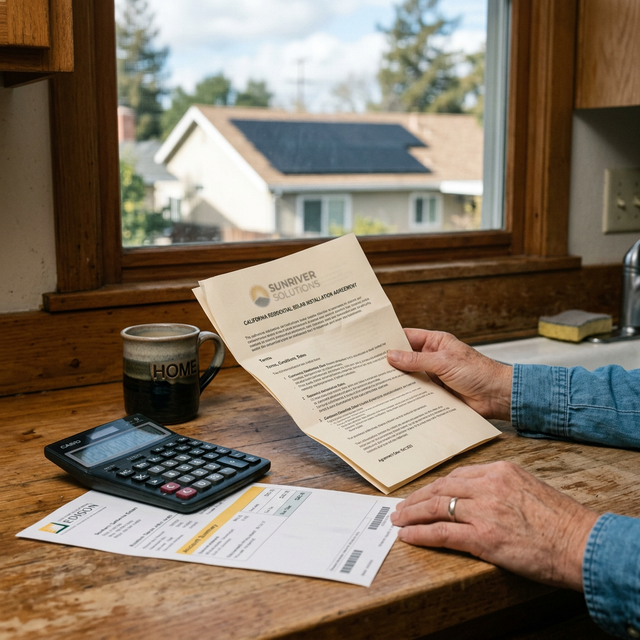
Installing solar panels can be a smart investment for homeowners looking to reduce energy costs and support clean energy. However, not every solar agreement goes as planned. Some homeowners discover unexpected costs, misleading sales practices, installation delays, or contract terms they did not fully understand. If you find yourself in this situation, it is important to know that California law provides certain protections and legal options.
Understanding Solar Contracts in California
A solar contract is a legally binding agreement between a homeowner and a solar company. These agreements may involve purchasing a solar system outright, financing the installation through a loan, or entering into a solar lease or power purchase agreement (PPA).
Before signing, consumers should carefully review the contract terms, including:
- Total project cost
- Financing details
- Installation timelines
- Equipment warranties
- Cancellation policies
- Performance guarantees
If any aspect of the agreement seems unclear or misleading, it is wise to seek clarification before moving forward.
California’s Three-Day Right to Cancel
One of the most important consumer protections in California is the right to cancel certain contracts within three business days. This rule generally applies to contracts signed at your home, a temporary sales location, or through door-to-door sales presentations.
This cooling-off period allows consumers to reconsider their decision without facing penalties.
To exercise this right:
- Review the cancellation notice included in your contract.
- Submit a written cancellation request within three business days.
- Keep copies of all communications and proof of delivery.
If you act within this period, the solar company must generally honor your cancellation request and refund any eligible payments.
Review the Contract for Cancellation Clauses
Even if the three-day cancellation period has expired, your contract may contain specific provisions that allow cancellation under certain circumstances.
Look for sections covering:
- Project delays
- Financing denial
- Failure to obtain permits
- Equipment shortages
- Breach of contract
- Customer cancellation rights
Many solar contracts include termination clauses that outline the conditions under which either party can end the agreement.
Understanding these provisions can help determine your next steps.
Canceling Before Installation Begins
Canceling a solar contract is often easier before installation work starts. If no equipment has been delivered and no permits have been filed, the solar company may be more willing to negotiate a cancellation.
However, some contracts may include cancellation fees or administrative charges.
Before agreeing to any fee, carefully review the contract and request a detailed explanation of the charges. In some cases, these fees may be negotiable.
What If the Solar Company Misled You?
California consumers are protected against deceptive business practices. If a solar salesperson made false promises or provided misleading information, you may have legal grounds to cancel the agreement.
Examples include:
- Misrepresenting energy savings
- Claiming government incentives that do not exist
- Providing inaccurate financing information
- Making false statements about utility rates
- Promising unrealistic installation timelines
Document all communications, advertisements, emails, and sales materials that support your concerns. These records may be valuable if you need to pursue legal action.
Handling Solar Loan Agreements
Many solar installations are financed through loans provided by third-party lenders. Canceling the solar installation contract does not always automatically cancel the financing agreement.
If you financed your solar system:
- Contact the lender immediately.
- Explain the cancellation situation.
- Request written confirmation regarding the loan status.
- Verify whether loan cancellation is required separately.
Failing to address the financing component can create complications even if the installation contract is canceled.
Filing Complaints with Consumer Protection Agencies
If a solar company refuses to honor a valid cancellation request or engages in unfair practices, you may consider filing a complaint with relevant agencies.
Potential options include:
- California Attorney General's Office
- Local consumer protection offices
- Contractors licensing authorities
- Better Business Bureau (BBB)
Filing a complaint may encourage the company to resolve the dispute and can also help protect other consumers from similar experiences.
Seeking Legal Assistance
Some solar cancel solar contract California disputes become complex, especially when significant amounts of money are involved. If you believe your rights have been violated, consulting an attorney experienced in consumer protection or contract law may be beneficial.
An attorney can help determine whether:
- The contract is legally enforceable.
- Fraud or misrepresentation occurred.
- Contract terms were violated.
- You may recover damages or fees.
Legal guidance can be particularly valuable if installation has already begun or if substantial financial obligations are involved.
Tips to Avoid Solar Contract Problems
The best way to avoid cancellation disputes is to carefully evaluate solar agreements before signing.
Consider the following precautions:
- Read the entire contract thoroughly.
- Compare multiple solar providers.
- Request all promises in writing.
- Verify licensing and credentials.
- Research customer reviews.
- Understand financing terms completely.
- Ask questions about cancellation policies.
Taking these steps can reduce the risk of unexpected issues later.
Final Thoughts
Canceling a solar contract in California can be straightforward in some situations and more complicated in others. Homeowners may benefit from California's three-day cooling-off period, contract-specific cancellation clauses, and consumer protection laws designed to prevent deceptive business practices.
If you are considering canceling a solar agreement, act quickly, review your contract carefully, and document every communication. When necessary, seek assistance from consumer protection agencies or legal professionals to ensure your rights are protected.
By understanding your legal options and taking prompt action, you can make informed decisions and avoid unnecessary financial stress while navigating the solar contracting process.