
Monitoring blood pressure is an important part of maintaining good health, especially for people living with hypertension, heart conditions, diabetes, or other medical problems. Regular blood pressure checks help identify changes in the body and allow healthcare professionals to respond before minor concerns become serious. However, visiting a hospital or clinic every time a reading is needed can be difficult for elderly individuals, patients recovering from surgery, and people with limited mobility. This is where professional care at home becomes valuable.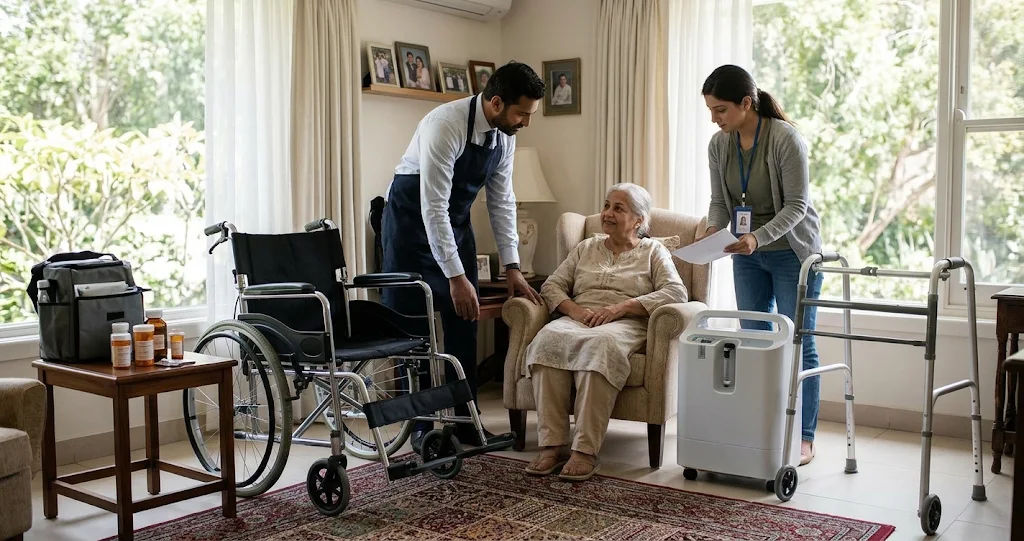
With the increasing demand for convenient healthcare, Home Nursing Services provide patients with access to trained nursing professionals who can perform essential health monitoring without requiring frequent hospital visits. Blood pressure monitoring is one of the common services nurses can provide during home visits. They use appropriate equipment, follow established measurement procedures, record readings, and communicate concerning changes to the responsible healthcare professional.
Understanding how this service works can help families make better decisions about home healthcare. From choosing the right equipment to recognizing unusual readings, professional monitoring can support safer and more comfortable patient care.
Blood Pressure and Why Monitoring Matters
Blood pressure refers to the force that circulating blood places against the walls of the arteries. It is measured using two numbers, which provide information about the pressure during different stages of the heartbeat.
The first number is called systolic pressure. It measures the pressure when the heart contracts and pumps blood throughout the body.
The second number is called diastolic pressure. It measures the pressure when the heart relaxes between beats.
A reading is generally written as two numbers, such as 120/80 mmHg. The abbreviation mmHg stands for millimetres of mercury, which is the standard unit used for measuring blood pressure.
Why Regular Blood Pressure Checks Are Important
Blood pressure can change throughout the day depending on physical activity, emotional stress, medication, sleep, and other factors.
Some people experience high blood pressure without noticing any symptoms. This makes regular monitoring particularly important because untreated hypertension can increase the risk of heart disease, stroke, kidney problems, and other complications.
Regular checks help healthcare professionals understand whether a patient's blood pressure is stable or changing over time.
Who Needs Frequent Blood Pressure Monitoring?
Several groups of patients may benefit from regular blood pressure checks.
These include:
-
Elderly individuals who need routine health supervision.
-
Patients diagnosed with hypertension.
-
People recovering from surgery.
-
Individuals with certain heart conditions.
-
Patients with diabetes who require additional health monitoring.
-
Pregnant women who need blood pressure assessments as advised by their healthcare providers.
-
Patients taking medication that may affect blood pressure.
The frequency of monitoring depends on the patient's medical condition and the instructions provided by their doctor.
Can Home Nursing Services Monitor Blood Pressure?
Yes, professional nurses can monitor blood pressure during scheduled home visits. It is a common nursing activity and an important part of routine patient assessment.
Qualified nurses use digital or manual blood pressure monitors to measure a patient's readings. They follow appropriate procedures to obtain reliable results and document the information for future reference.
Professional Home Nursing Services can be especially helpful for patients who cannot travel comfortably to healthcare facilities or need repeated monitoring throughout the day.
However, blood pressure monitoring is not simply about checking numbers. Nurses also consider the patient's overall condition, medical history, current symptoms, and prescribed treatment plan.
How Nurses Perform Blood Pressure Checks
A nurse generally follows a systematic process to obtain an accurate reading.
First, the patient is asked to sit comfortably and relax. Ideally, the patient should avoid exercise, smoking, and caffeine for approximately 30 minutes before the measurement.
The nurse then places the appropriate cuff around the patient's upper arm. The cuff should fit correctly because an incorrectly sized cuff can produce inaccurate readings.
With a digital monitor, the machine automatically measures blood pressure and displays the results.
With a manual monitor, the nurse uses a cuff, pressure gauge, and stethoscope to identify the systolic and diastolic readings.
The results are then recorded for comparison with previous measurements.
Can Nurses Monitor Blood Pressure Daily?
Yes. Nurses can perform daily blood pressure checks when this is included in the patient's care plan.
Daily monitoring may be recommended for people with uncontrolled hypertension, patients recovering from certain medical conditions, or individuals whose doctors need frequent information about their blood pressure.
Some patients may need only occasional checks, while others require monitoring several times a day.
The schedule should always follow medical advice rather than a general routine.
Benefits of Professional Blood Pressure Monitoring at Home
Monitoring blood pressure at home offers several advantages, particularly for people who need ongoing medical supervision.
Convenience for Patients With Limited Mobility
Travelling to a hospital can be physically exhausting for elderly patients and individuals recovering from injuries or surgery.
Home nursing allows patients to receive routine blood pressure assessments in familiar surroundings.
This reduces the need for unnecessary travel and can make healthcare more accessible.
Early Identification of Blood Pressure Changes
Regular measurements help identify patterns that might otherwise go unnoticed.
For example, a patient may experience consistently higher readings in the morning or unusual changes after taking certain medications.
When nurses document these findings, healthcare providers can review the information and decide whether further assessment or treatment adjustments are necessary.
Better Communication With Doctors
Accurate records make it easier for doctors to understand how a patient's blood pressure changes over time.
Professional nurses can share documented readings with the responsible healthcare provider, following the patient's consent and care arrangements.
This supports better communication between patients, families, nurses, and doctors.
Reduced Stress During Healthcare Visits
Some patients experience anxiety when visiting hospitals or clinics. This can temporarily increase their blood pressure, a phenomenon sometimes associated with white-coat hypertension.
Home monitoring allows readings to be taken in a more familiar environment.
Although home readings are valuable, doctors may still recommend clinic measurements or other assessments when necessary.
Equipment Used for Blood Pressure Monitoring
Reliable equipment is essential for obtaining accurate blood pressure measurements.
Professional nurses generally select equipment according to the patient's needs and the instructions in their care plan.
Digital Blood Pressure Monitors
Digital blood pressure monitors are commonly used in home healthcare.
They are relatively simple to operate and display systolic pressure, diastolic pressure, and pulse rate on a screen.
Some models also store previous readings, making it easier to identify changes over time.
Upper-arm monitors are generally preferred over wrist monitors because they tend to provide more reliable measurements when used correctly.
Manual Blood Pressure Equipment
al equipment includes an inflatable cuff, pressure gauge, and stethoscope.
Trained nurses can use this equipment to measure blood pressure by listening to blood flow sounds.
Manual monitoring requires proper technique and experience, which is why professional training is important.
Choosing the Correct Cuff Size
The cuff must fit the patient's upper arm appropriately.
A cuff that is too small may produce falsely high readings, while one that is too large may produce inaccurate results in the opposite direction.
Nurses should check the equipment manufacturer's sizing guidance before taking measurements.
How Nurses Maintain Accurate Blood Pressure Records
Recording blood pressure readings is just as important as measuring them.
A single reading provides limited information because blood pressure naturally changes throughout the day.
Professional nursing care therefore focuses on maintaining consistent and organized records.
Documenting Every Reading
A nursing record may include:
-
Date and time of measurement.
-
Systolic blood pressure.
-
Diastolic blood pressure.
-
Pulse rate.
-
Patient position during measurement.
-
Any symptoms reported by the patient.
-
Relevant medication information.
-
Actions taken or healthcare professionals contacted.
These details help doctors understand the patient's condition more clearly.
Identifying Changes Over Time
Consider a patient whose readings are usually around 125/80 mmHg but regularly increase to 155/95 mmHg.
Although one elevated reading does not automatically establish a diagnosis, repeated increases deserve attention.
A nurse can document the pattern and communicate it to the responsible doctor.
This allows the doctor to determine whether additional investigations or treatment changes are needed.
Maintaining Confidentiality
Blood pressure records contain personal health information.
Nurses should maintain confidentiality and share information only with authorized individuals involved in the patient's care.
Families should also understand how monitoring records are stored and communicated.
What Blood Pressure Readings Mean
Understanding basic blood pressure categories helps patients and caregivers recognize why regular monitoring matters.
The following categories are commonly used for adults:
|
Blood pressure category |
Systolic |
Diastolic |
|---|---|---|
|
Normal |
Below 120 |
Below 80 |
|
Elevated |
120–129 |
Below 80 |
|
High blood pressure, Stage 1 |
130–139 |
80–89 |
|
High blood pressure, Stage 2 |
140 or higher |
90 or higher |
|
Severe hypertension |
Higher than 180 and/or 120 |
These categories are general adult guidelines. Diagnosis requires appropriate clinical assessment, and individual targets may differ depending on age, pregnancy, medical history, and other health conditions.
What Happens When Blood Pressure Is High?
High blood pressure means the force against artery walls is consistently greater than recommended.
It often develops without noticeable symptoms.
However, persistent hypertension can gradually damage blood vessels and increase the risk of serious cardiovascular complications.
A nurse who identifies repeated high readings should document them and inform the appropriate healthcare professional.
Nurses should not independently change prescribed medication unless specifically authorized under an appropriate clinical protocol.
What Happens When Blood Pressure Is Low?
Low blood pressure may cause symptoms such as:
-
Dizziness.
-
Weakness.
-
Blurred vision.
-
Nausea.
-
Fainting.
-
Confusion in some situations.
Some people naturally have lower blood pressure without experiencing health problems.
However, a sudden drop accompanied by symptoms may indicate dehydration, bleeding, medication effects, or another medical issue.
Professional assessment is important when unusual readings occur.
When Should a Nurse Report an Unusual Reading?
Nurses must understand when a blood pressure result requires additional attention.
Not every unusual reading represents an emergency, but certain situations should never be ignored.
Repeatedly High Readings
If a patient repeatedly records blood pressure above their prescribed target, the nurse should communicate the findings to the responsible healthcare provider.
The doctor can assess whether the treatment plan needs to be reviewed.
Patients should not increase or reduce medication doses independently.
Extremely High Blood Pressure
A reading above 180 systolic and/or 120 diastolic requires immediate attention.
The measurement should generally be repeated after at least one minute.
If it remains extremely high without symptoms, the patient should contact a healthcare professional immediately for urgent guidance.
If the patient experiences chest pain, difficulty breathing, weakness, numbness, vision changes, difficulty speaking, or other serious symptoms, emergency medical assistance should be sought immediately.
Do not wait for another routine nursing visit.
Unusually Low Readings With Symptoms
If the patient experiences fainting, severe dizziness, confusion, or signs of shock, immediate medical assessment may be necessary.
The nurse should follow emergency procedures and communicate the patient's condition to the appropriate medical team.
How Home Nursing Services Support Patients With Hypertension
Hypertension often requires long-term management rather than a single medical intervention.
Professional Home Nursing Services can support patients by making regular monitoring part of their daily healthcare routine.
Following Prescribed Medication Schedules
Nurses can help patients follow medication schedules when medication assistance is included in their authorized care plan.
They may remind patients about prescribed doses, observe for possible side effects, and report concerns to the doctor.
Medication changes must remain under the direction of an authorized healthcare professional.
Encouraging Healthy Lifestyle Habits
Nurses can reinforce lifestyle advice provided by doctors.
This may include:
-
Following a balanced diet.
-
Reducing excessive salt consumption.
-
Maintaining a healthy body weight.
-
Participating in suitable physical activity.
-
Avoiding tobacco.
-
Limiting alcohol.
-
Managing stress.
-
Getting sufficient sleep.
These habits can support blood pressure management alongside prescribed treatment.
Supporting Elderly Patients
Older adults may experience changes in blood pressure when standing up, a condition known as orthostatic hypotension.
Nurses can measure blood pressure in different positions when clinically indicated and monitor symptoms such as dizziness or instability.
This is particularly important for patients at risk of falling.
Can Home Nursing Services Monitor Blood Pressure After Surgery?
Yes. Blood pressure monitoring may form part of postoperative nursing care.
After surgery, doctors may want to monitor blood pressure because changes can sometimes be associated with pain, medication effects, dehydration, bleeding, or other complications.
Nurses can measure and document readings according to the patient's postoperative care instructions.
Monitoring During Recovery
Patients recovering at home may need regular observations depending on the type of surgery and their overall condition.
Nurses can also monitor other important measurements, including pulse, temperature, breathing rate, and oxygen saturation when these are included in the care plan.
These observations provide a broader picture of the patient's recovery.
Recognizing Possible Complications
Sudden changes in blood pressure may require further investigation.
For example, unusually low blood pressure combined with weakness, fainting, or signs of bleeding should be treated seriously.
Home nurses can help recognize warning signs, but they cannot replace hospital-based emergency assessment when a serious complication is suspected.
How to Choose Reliable Home Nursing Services
Choosing a suitable nursing provider is important because blood pressure monitoring involves clinical responsibilities.
Families should evaluate the qualifications, experience, equipment, and communication practices of the provider before arranging care.
Check Nursing Qualifications
Ask whether nurses have appropriate professional qualifications and registration where required.
They should understand basic patient assessment, blood pressure measurement, infection prevention, and emergency response procedures.
Confirm the Available Monitoring Equipment
Ask whether the provider uses validated blood pressure monitors and has cuffs available in different sizes.
Equipment should be maintained properly and used according to manufacturer instructions.
Discuss the Patient's Medical Requirements
Before starting care, explain the patient's medical history, current medication, known blood pressure concerns, and doctor's instructions.
This helps the nursing provider understand what type of monitoring is required.
Understand the Reporting Process
Ask how readings will be recorded and communicated.
A reliable provider should have a clear procedure for reporting unusual results and contacting the responsible healthcare professional.
Review Scheduling and Availability
Some patients require occasional visits, while others need daily or multiple visits.
Choose a provider whose schedule can accommodate the patient's care plan.
Families should also clarify arrangements for weekends, emergencies, and unexpected changes in nursing availability.
Common Mistakes to Avoid During Home Blood Pressure Monitoring
Even with professional assistance, patients and caregivers should understand common measurement mistakes.
Measuring Immediately After Physical Activity
Exercise can temporarily increase blood pressure.
Patients should rest quietly before a routine measurement.
Using the Wrong Arm Position
The arm should be supported at approximately heart level.
Allowing it to hang down or holding it too high can affect the result.
Talking During Measurement
Speaking, moving, or laughing during a blood pressure check may influence the reading.
Patients should remain quiet and relaxed.
Measuring Over Clothing
The cuff should generally be placed directly against the skin rather than over thick clothing.
Depending on One Reading
Blood pressure changes naturally.
Repeated measurements, taken correctly and interpreted in context, provide more useful information than relying on a single result.
Frequently Asked Questions
Can a home nurse check blood pressure every day?
Yes. Nurses can check blood pressure daily when the patient's medical condition and care plan require regular monitoring.
Do nurses use digital blood pressure machines?
Yes. Digital upper-arm monitors are commonly used because they are convenient and relatively easy to operate. Trained nurses may also use manual equipment.
Can a nurse identify high blood pressure?
A nurse can measure blood pressure, recognize elevated readings, document patterns, and report concerns. However, a doctor or other authorized healthcare professional is responsible for making a diagnosis.
Can blood pressure monitoring reduce hospital visits?
It can reduce the need for some routine monitoring visits, particularly when home measurements are appropriate. However, it does not eliminate the need for medical appointments, diagnostic tests, or emergency care.
Should patients keep their own blood pressure records?
Yes. Keeping a personal record is useful, even when a professional nurse performs regular checks. Patients should share these records with their healthcare providers.
Can home nurses monitor blood pressure during pregnancy?
Yes, appropriately trained nurses can perform blood pressure checks during pregnancy when included in the care plan. However, pregnancy-related hypertension requires specific medical supervision. Severe headache, visual disturbances, upper abdominal pain, or sudden swelling should be reported urgently.
Conclusion
Blood pressure monitoring is an essential part of maintaining good health, particularly for individuals living with hypertension, heart disease, diabetes, and other conditions that require regular medical supervision. Fortunately, professional nursing care makes this important service available without requiring patients to travel to a hospital or clinic for every routine measurement.
Yes, Home Nursing Services can monitor blood pressure through trained nursing professionals who use appropriate equipment, follow correct measurement techniques, and maintain organized health records. Their support can help elderly individuals, postoperative patients, and people with limited mobility receive consistent attention in a comfortable home environment.
The value of professional monitoring goes beyond obtaining systolic and diastolic readings. Nurses can observe changes, recognize potential warning signs, document symptoms, support prescribed medication routines, and communicate important information to doctors. These activities contribute to better coordination between patients, caregivers, and healthcare professionals.
Families should remember that accurate monitoring depends on suitable equipment, correct cuff sizing, proper patient positioning, and consistent measurement practices. They should also understand that nurses do not independently diagnose hypertension or change prescribed medication unless specifically authorized.
Most importantly, home monitoring should complement professional medical care rather than replace it. Patients with persistently high or low readings, unusual symptoms, or sudden changes in their condition need appropriate medical assessment.
Choosing qualified professionals and establishing a clear monitoring schedule can make home healthcare more effective. With proper planning, reliable equipment, and communication with doctors, blood pressure monitoring at home can become a valuable part of long-term patient care.